Chimpanzees
The Nigerian chimpanzee Pan troglodytes ellioti is the most endangered subspecies with a population estimate as low as 6,000 individuals out of a continent-wide species population estimate of 235,000. Ellioti chimpanzees were only recognized as a distinct subspecies in 2001; the subspecies name was originally vellerosus but changed to ellioti after thorough review of historical collection records. This table, with population estimates for the four subspecies, plainly shows them to be the most highly endangered:
| common name | scientific name | population |
| Eastern chimpanzee | Pan troglodytes schweinfurthii | 98,000 |
| Central chimpanzee | Pan troglodytes troglodytes | 93,000 |
| Western chimpanzee | Pan troglodytes verus | 38,000 |
| Nigerian chimpanzee | Pan troglodytes ellioti | 6,000 |
Pandrillus projects are the only facilities for ex-wild chimpanzees in the Cross-Sanaga region. The Limbe Wildlife Center cares for 55 chimpanzees and Drill Ranch cares for 31, ages 2 to 32 years. All our chimpanzees came from tragic backgrounds: each was born in the wild and lived free with their families until being orphaned when their nursing mother was shot and killed for the illegal, commercial bushmeat trade. They suffered fear, loss, malnourishment, psychological, emotional and/or physical abuse, and sometimes many years of loneliness. Their personal histories are all compelling but not unique as such atrocities continue to play out daily across Africa in the 22 habitat countries where chimpanzees still survive, despite strict laws against hunting, legally protected habitat areas, conservation NGO input, and international treaties against trade.

Jacob at 32 is Pandrillus’ eldest chimpanzee. Born in Nigeria’s Oban Hills, he was orphaned by hunting, and lived alone for 18 years in a concrete cell at the now-closed Calabar Zoo, where all other mammals had died of starvation. Peter & Liza found Jacob close to death in 1990. For 11 years, Drill Ranch staff brought him food, water and companionship daily – the latter he most valued. In 2001 Jacob moved to Afi Mountain and felt sunshine and raindrops for the first time since infancy. He is playful in middle age, full of harmless pranks, and shares his holding area with teenagers Micky and Jess. We hope Jacob will lead the group in the new forest enclosure.
Jacob’s slender physique, dark face, small ears, and almond-shape eyes typify the ellioti chimpanzee.
Nigeria is a hub for illicit chimpanzee trafficking in Africa, with many animals being smuggled into the country from Cameroon for domestic and international trade. One reason for this dubious distinction may be the many international airlines serving Nigeria with numerous daily flights to Europe, the Middle East and elsewhere in Africa from Lagos, Kano and Abuja. Therefore, although Pandrillus’ facilities are located in ellioti habitat, needy chimpanzees from a much larger catchment area find homes at our projects. In Nigeria we care for chimpanzees that were confiscated after being smuggled into the country from as far away as Sierra Leone and Equatorial Guinea. Because Cameroon is home to both ellioti and a much larger population of Central African troglodytes chimpanzees, the population at Limbe Wildlife Center is mixed.

Former keeper Ikwo Abam with Patrick Opepe, orphaned in Gashaka Gumpti National Park, and Itambu, orphaned in Cross River National Park. Chimpanzees and other wildlife require urgent protection from hunting if they are to survive in Nigeria.
Pandrillus collaborates with 2 other chimpanzee sanctuaries in Cameroon (see partners and links), both located in troglodytes habitat, to place incoming orphans at the most appropriate facility, depending on their subspecies, if known. Our collective goal in Cameroon is to eventually have all the ellioti at Limbe Wildlife Center and with the other facilities caring for Central African chimpanzees. The three sanctuaries have also formed the Cameroon Chimpanzee Reintroduction Group. The CCRG’s long term plan is to release a group back to the wild as we identify a suitable habitat area which could benefit from the establishment conservation presence. This first release will likely be a group of chimpanzees belonging to the troglodytes subspecies.
Pandrillus actively discourages chimpanzee breeding at its facilities, yet we believe it is important to not only preserve vellerosus’ genetic diversity by maintaining these highly endangered animals in good physical condition, but to also strive to preserve any cultural or behavioral distinctiveness that ellioti may possess. As yet, no behavioral or ecological studies have been undertaken of wild ellioti. It is therefore a concern to keep these unique and little known animals together in captivity to the extent we are able.
Pandrillus projects are all open to the public 365 days a year. We welcome more than 50,000 visitors annually, and most are indigenes of areas where chimpanzee live or used to live. Few have ever seen a live chimpanzee and fewer still have seen healthy, well-adjusted, busy, well-fed chimps, participating in the active social life so vital to them. The few who have seen a chimpanzee have typically witnessed a malnourished infant, miserable, suffering, and desperately lonely, tied on a small chain tied in a forgotten yard. There is no positive message in that scenario about chimpanzees as a species, no honor or compassion.
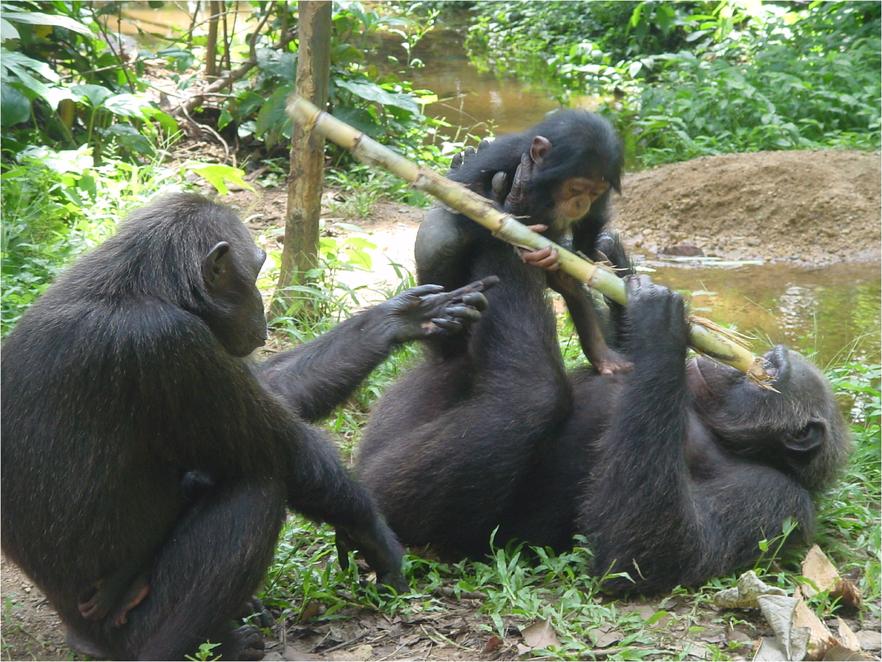
Adult females Pansy and Po with young Pi at Drill Ranch Afi Mountain
This opportunity for Nigerians and Cameroonians – from a villager whose brother may hunt chimpanzees, to a bureaucrat who may influence policy to protect them – is so precious to the survival of the species. Ultimately, it is only when those people who share their habitat and national identity become personally committed to chimpanzee survival can we have real hope for them over the next 50, 100 or even 200 years.
For more information about ellioti chimpanzees, please visit http://www.ellioti.org